
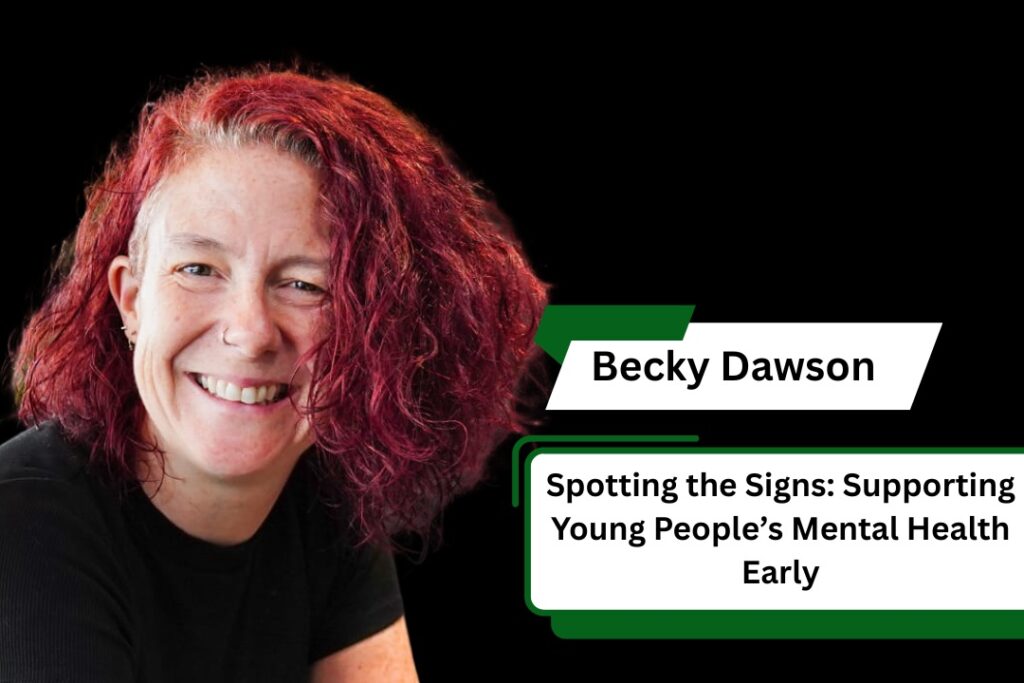
Spotting The Signs: Supporting Young People’s Mental Health Early
When we are looking to support children and young people’s wellbeing and mental health, one of the most powerful things we can do is spot the signs early enough to engage in a conversation and potentially offer support.
The need to spot the signs is crucial because often young people may be reluctant to share that they are struggling or may not even realise that their struggles are related to their mental health. So, as adults, having the confidence to spot the signs is an incredibly important tool.
The first thing to consider about spotting the signs that a child or young person may be struggling is that those signs can differ from one young person to another. We need to keep in mind that struggles with wellbeing and mental health present in many different ways. Even in one person, this can look different on different days.
I want to share some basic considerations that can be helpful when we live with or work with young people. However, it is important to always remember that we must look at the individual and understand them before forming conclusions. There is no set of rules we can “learn” and be consistently confident that we will always spot the signs.
The main thing to be aware of is change. When we see a change in a young person, it can often indicate that something is happening for them. I am being careful here not to force us into a medicalised approach to this conversation. Just because someone appears to have a low mood or feels anxious does not mean they have a diagnosable mental health condition. It is important to remember, and indeed teach our young people, that changes in mood are a normal part of life. In fact, it would be unrealistic to imagine that a young person could always be happy. No one is always happy. Our first step is to recognize that moods are changeable, there are no bad emotions, and normal human experiences are not something to be fixed.
What we could be looking for are signs when those moods become pervasive and start to impact a young person’s day-to-day ability to engage in normal activities and participate in their life. When emotions begin to affect daily functioning, that is when we should consider stepping in and having a conversation. Those signs might include:
- When a young person withdraws or becomes more isolated, perhaps becoming reluctant to engage in activities they previously enjoyed.
- When they stop connecting with friends, spend increasing amounts of time at home or in their room, and disengage from conversations at school.
- When a young person becomes increasingly aggressive in their behavior or engages in risky behaviors they have not previously displayed.
- When we notice that they find it more challenging to regulate their emotions.
I want to be clear that having emotions, feeling emotions, and showing emotions is not a sign of poor wellbeing or a mental health condition. However, when those emotions become a barrier to a young person living their life, we need to consider whether they require additional support.
Having outlined the signs we might see, we must do this alongside understanding the context of each young person’s life. Understanding their day-to-day experience is essential.
For example, if we are concerned about a young person because they appear more withdrawn and isolated, and we then discover that they have been experiencing bullying, we must take this into consideration. This is not necessarily an issue with their mental health; it is an issue with the bullying they are experiencing, and addressing that issue should be our focus. That is not to say we should not offer emotional support or guidance on how a young person can manage the challenging feelings they are experiencing, but it should not be about “solving” those feelings.
We can fall into the trap of medicalising normal reactions to difficult situations. We can forget to consider the context and the external factors that may be impacting a young person. As adults, we often assume that children and young people have easy lives and nothing to feel stressed or anxious about. The truth is that many young people are facing increasing challenges, whether academic pressure, exam stress, relationship difficulties, or living in poverty, to name a few. In those situations, we should support young people through their challenges before trying to “fix” their reactions.
It is important to be clear: this is not an exact science. There is no failsafe list of signs. The most important thing we can do is build trusting, supportive relationships with the children and young people in our lives so that we know them well enough to recognise when things are changing, and so that they trust us enough to share when they are struggling.
The Author

Becky Dawson
Becky Dawson is a specialist in children and young people’s mental health, wellbeing, and safeguarding. With over 20 years of experience in education, including senior leadership and SEND coordination, she has led Whole School mental health initiatives within the London Borough of Newham and collaborated with Newham CAMHS to support young people awaiting services. She now works as a freelance coach, consultant, and facilitator, ensuring mental health and wellbeing remain central to educational practice.