
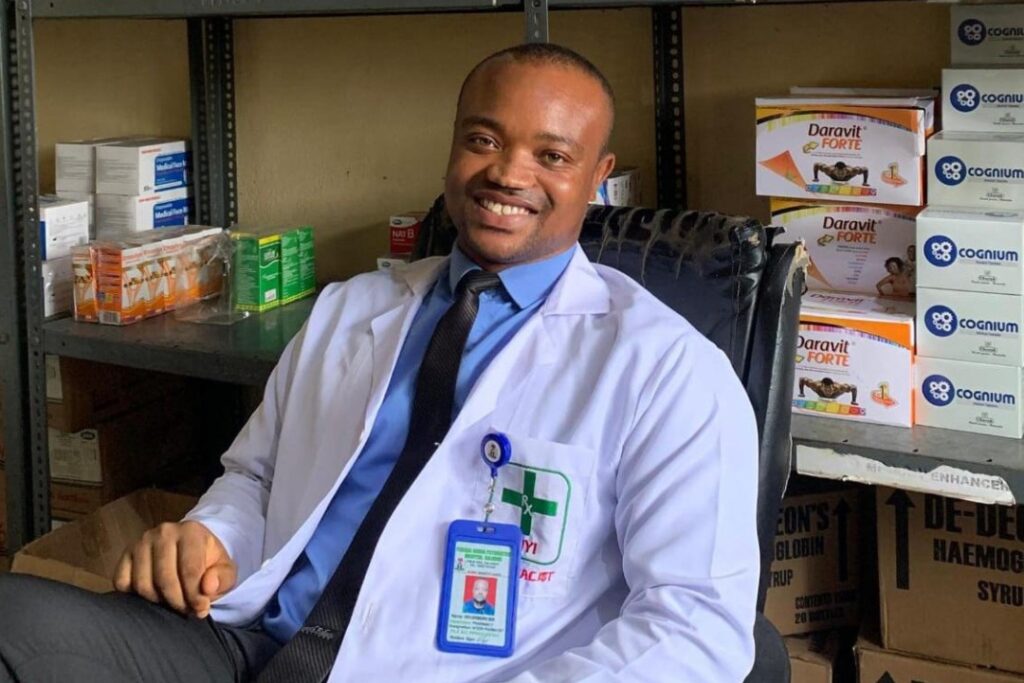
I am the first Pharmacist from my village - let's fund the services that save lives
In this blog, a Pharmacy graduate describes how repeated academic setbacks spiraled into suicidal depression. They highlight why targeted counseling and educational support are just as vital as clinical intervention in helping students overcome failure and rebuild their lives
My journey towards restoration started at my lowest point in 2019, a time when I was seriously contemplating suicide. Everything felt stagnant and heavy; I had completely lost my way and could not see a path forward.
I had faced repeated academic setbacks that left me feeling disconnected, often walking the streets talking to myself. Although I tried to escape the pain through alcohol, it only served to suppress the hurt rather than address the root of my despair.
My recovery journey
My path to recovery began with a simple, unexpected moment. While I was still struggling with dark thoughts, I happened to come across information about LEAD on social media. Something about it made me reach out, and that one message changed everything. It is important to realize that connecting with support doesn’t always have to be a rigid, clinical process; sometimes, it starts with a single, informal click that leads you to a counselor who is ready to listen or a community ready to provide you with the help you need.
Reaching out allowed me to start understanding that I wasn’t just “stuck”, I needed the right tools to move forward. It was crucial to my recovery, enabling me to take greater control of my education and develop a sense of ownership over my mental health.
These sessions were transformative and provided a much-needed start to my healing. But recovery required more than just emotional venting; it required practical strategies. While I had felt something spiritual was working against me, the guidance of an educational counselor helped me challenge the way my symptoms affected my day-to-day studies. I used techniques I learnt to understand what I was reading and prepare for exams, proving that discipline and support can tackle the obstacles that feel insurmountable.
The power of a supportive community
One of the most profound shifts in my journey was the realization that I didn’t have to carry the weight of my struggles in isolation. The community at LEAD provided a sanctuary where I felt truly heard for the first time. In a world that often stigmatizes mental health struggles, having a network that validates your pain while simultaneously believing in your potential is life-changing.
This supportive environment acted as a bridge, moving me from a state of “surviving” to a state of “thriving”. It taught me that resilience isn’t just about individual strength, it’s about the strength we draw from those who refuse to let us fall behind. My story is a testament to the fact that when we invest in people, we aren’t just helping them pass an exam; we are helping them reclaim their identity.
Why support and community matter
Extensive access to counseling and educational guidance helped me to recover faster, reducing the pressure I felt to figure out a future on my own. Having a community that understands the unique pressures of student life made all the difference in my restoration.
Severe depression is a serious, life-limiting condition, and in that sense, it is as debilitating as any physical ailment. However, unlike physical health conditions, mental illness seems to come with a societal expectation that the individual should find ways to fight the illness in isolation. This “do-it-alone” mentality is dangerous; no one should be expected to navigate such a heavy burden without a safety net.
A massive amount of effort goes into the academic side of university life, but equivalent energy must be put into the support services and peer networks that keep students alive to see their graduation. It is the strength of the community that provides the scaffolding for academic success. Without the intervention of organizations like LEAD, many people struggle with their symptoms for years, never achieving their true potential. They fall through the cracks not because of a lack of will, but because they lack the specific peer-led companionship and psychological support needed to bridge the gap between illness and achievement.

Life after the struggle: Practicing with purpose
Today, my story is different. I am a graduate of the Pharmacy Department, Class of 2025. While others in my family have earned degrees, I am the first to become a pharmacist, and the first pharmacist from my entire village. This achievement is a testament to the fact that your current struggle does not have to be your final destination.
Stepping into the world as a licensed pharmacist, I carry the lessons from my experience with depression into my clinical practice. My experiences have given me a unique perspective on patient care; I understand that the person behind the prescription often needs more than just medication to truly heal. I am now in a position to serve my community, ensuring that others receive the same empathy and professional care that was once extended to me.
Looking back, I realize that my journey, though not linear, shaped me in ways I could never have imagined. I was fortunate to find a support network that helped me find my footing, but not everyone has access to such care.
Moving forward, let’s invest in a support system that doesn’t just stop the fall, but actually helps students stand back up, find their purpose, and build the future they deserve.
The urgent need for funding
For a story like mine to be possible, organizations like LEAD need consistent, reliable funding. Mental health support is often the first area to face budget cuts, yet it is the very foundation upon which academic and professional success is built. When we fund these services, we aren’t just donating to a cause; we are investing in the future pharmacists, engineers, and leaders who are currently fighting a silent battle to stay in school.
Your support ensures that when a student reaches out through social media or a quick message, there is a professional on the other end ready to guide them back to hope. I hope that, moving forward, we see greater investment in professional psychological services, time management coaching, and mental health literacy training.
We must prioritize funding for these lifelines so they remain available for every student who feels they have lost their way or that they are about to. We should aim not only to help people cope, but to support them in living fully, with purpose and possibility, restoring them to their full potential through the power of community.