
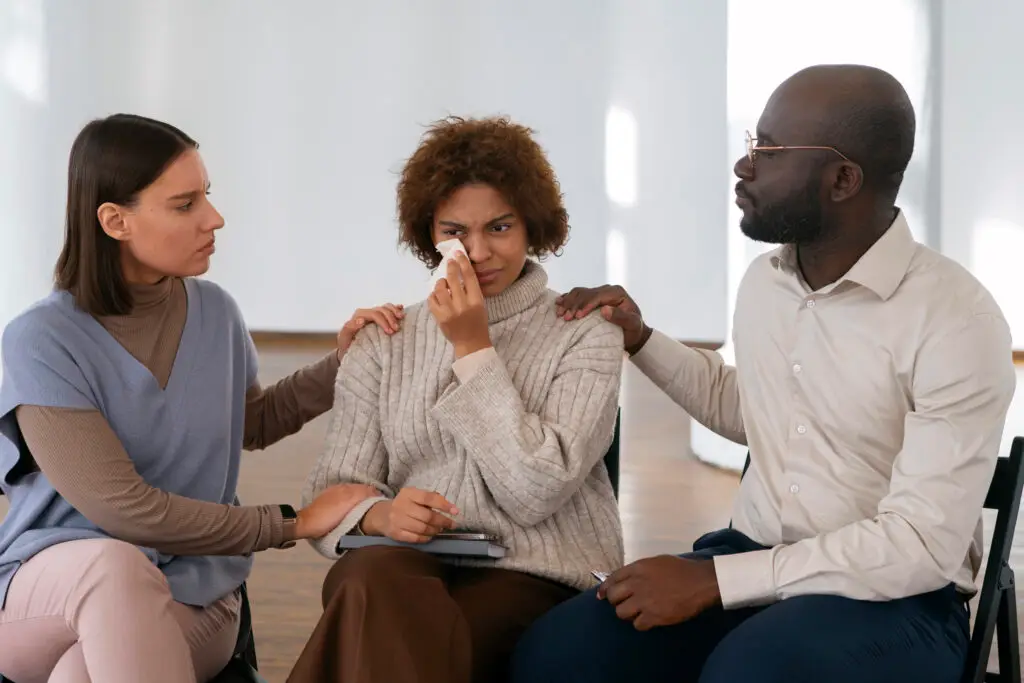
Safe Spaces: Why Group Therapy and Vulnerability are Secrets to Emotional Healing
We have been sold a massive lie about what it means to heal.
In the modern world, self-care is often packaged as a deeply individual journey. We are told to go home, lock our doors, put on a face mask, download a meditation app, and “fix” our minds in isolation. We treat emotional wellness like a solo DIY project.
But humans were never meant to carry their heaviest burdens alone.
While individual reflection and therapy are incredibly valuable, there is a distinct limit to how much we can heal by ourselves. The true secret to lasting emotional healing lies in a space we often run away from out of fear: vulnerability within a safe community.
Here is the science and heart behind why group therapy, peer circles, and shared vulnerability are the ultimate keys to emotional recovery.
1. The Neuroscience of Co-Regulation: Why Your Nervous System Needs Others
To understand why communal healing works, we have to look back at our biology. For thousands of years, isolation equaled death. If an early human was separated from their tribe, they became highly vulnerable to predators.

Because of this evolutionary history, your brain interprets chronic isolation and loneliness as a physical threat. When you withdraw and try to battle anxiety or trauma completely on your own, your amygdala remains on high alert.
Your nervous system cannot fully relax in total isolation. It needs co-regulation.
Co-regulation is the biological process where one person’s nervous system influences another’s. When you sit in a room with calm, empathetic, and grounded individuals:
- Your heart rate naturally synchronizes with theirs.
- Your brain releases oxytocin (the bonding hormone), which actively dampens the stress response and lowers cortisol levels.
- Your “fight-or-flight” response begins to disarm because your brain registers: “I am surrounded by my tribe. I am safe.”
Healing isn’t just about changing your thoughts; it is about calming your nervous system. And we calm our nervous systems best when we are together.
2. Breaking the Spell of "Only Me": How Shame Dies in a Group
The most dangerous trick anxiety and depression play on your mind is convincing you that you are uniquely broken.
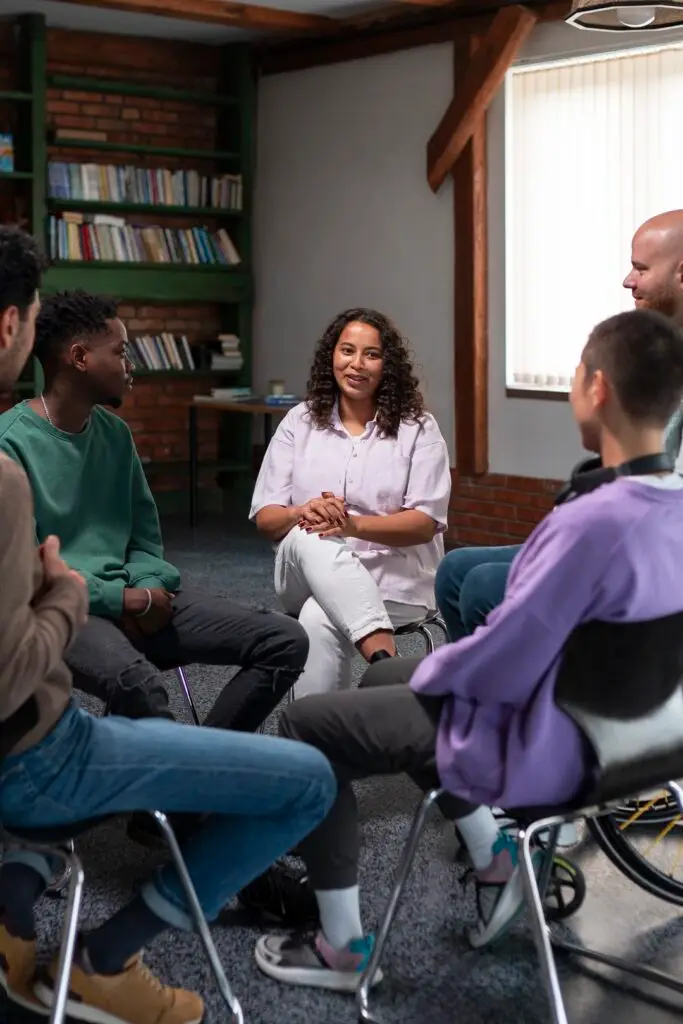
When you struggle in secret, your brain creates a false narrative: “Everyone else has their life together. I am the only one who feels this weak, this lost, or this anxious.” This thought pattern breeds intense shame, and shame thrives in the dark.
Group therapy and peer support circles are the ultimate antidote to this illusion.
When you enter a safe, structured space and hear someone else voice your exact, hidden fears, something miraculous happens:
- The heavy burden of shame immediately lifts.
- You realize your struggles are not a reflection of a personal defect, but a normal human response to difficult circumstances.
- The isolation-driven anxiety dissolves, replaced by a profound sense of validation.
As the renowned researcher Dr. Brené Brown says, “Shame cannot survive being spoken.” When shared in a safe space, your deepest insecurities lose their power over you.
3. Vulnerability is a Strength, Not a Sacrifice
We often avoid opening up because we associate vulnerability with weakness or exposure. We think that showing our wounds makes us targets.
But true vulnerability is not about oversharing or crying without boundaries. Vulnerability is the courage to show up and be seen when you cannot control the outcome.
In a group setting, vulnerability is actually a form of emotional leadership. When one person has the bravery to say, “I am struggling, and I don’t have it all figured out,” they silently give everyone else in the room permission to drop their heavy masks, too.
By letting your guard down, you build bridges instead of walls. You create a container where real, unfiltered conversation can happen, and that is where healing begins.
3. Vulnerability is a Strength, Not a Sacrifice
At LEAD, we know that young leaders cannot thrive if they are operating in survival mode and carrying their struggles in silence. True empowerment does not happen in isolation; it is forged in community.

That is why we are committed to building and championing “Safe Spaces.” Whether through structured group discussions, community healing circles, or transparent peer-to-peer check-ins, we are designing environments where:
- Your voice is heard without judgment.
- Your experiences are validated by your peers.
- Your biology is supported through the power of connection.
You do not have to have everything figured out to be worthy of connection. You do not need to be “healed” before you can belong.
Taking the First Step
Healing in community doesn’t mean you have to share your deepest secrets with a crowd of strangers on day one. It starts with simple, deliberate shifts:
- Reach out to one trusted person and share how you are actually doing today.
- Listen actively to others without immediately trying to “fix” their problems. Just offer your presence.
- Seek out peer groups or community circles where mental wellness is spoken about openly and without stigma.
Let’s dismantle the myth of the solitary grind. Let’s stop trying to heal alone, and start rediscovering the restorative power of standing together.
Have you ever experienced the relief of sharing a heavy burden with someone who truly understood?
Let’s start the conversation below.